A full set of fixed teeth on four implants
All-on-4 replaces an entire arch of missing teeth with a fixed bridge anchored on four implants. It is a well-documented solution for people who have lost most of their teeth or are tired of a loose denture, and at Apex Dental it is planned and placed by Dr Jonathan Mifsud.
All-on-4 dental implants in Malta: who the treatment is for
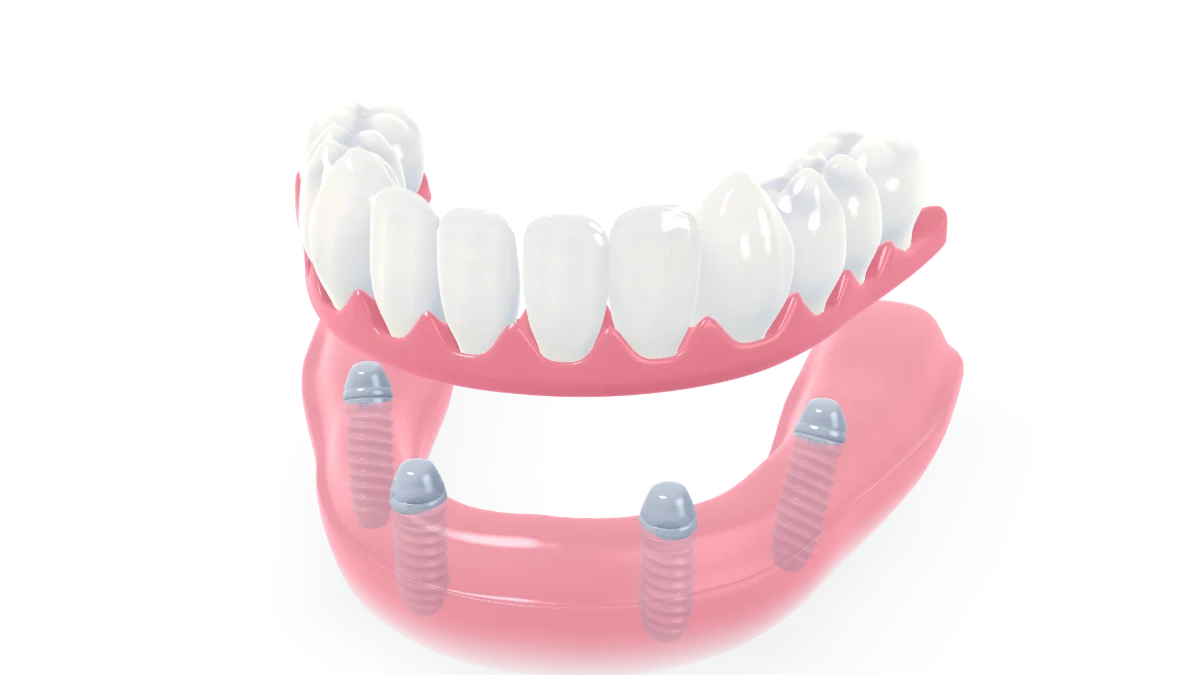
All-on-4 replaces every tooth in one jaw, upper or lower, with a fixed bridge held on four implants. It is meant for people who have lost all or most of their teeth in a jaw, whose remaining teeth are failing and cannot sensibly be saved, or who wear a full denture and are tired of it moving, rubbing or covering the roof of the mouth. The bridge is screwed onto the implants, so it is not taken out at night or for cleaning.
What decides whether All-on-4 suits you
Age on its own is rarely the deciding factor; your general health, your gums, and how much bone there is and where it sits matter more. Every case starts with a consultation, a full medical history and a CBCT scan, a low-dose 3D X-ray that shows the bone, the nerve and the sinus. Active gum disease, poorly controlled diabetes or heavy smoking usually need managing before treatment. If you still have some teeth, we look honestly at whether any are worth keeping, and if All-on-4 is not right for you, Dr Jonathan Mifsud will tell you plainly and explain what would serve you better.
If your remaining teeth are failing
Failing teeth are removed as part of the treatment and, where the bone and gums allow, the implants are often placed at the same appointment. Where infection or bone needs dealing with first, that comes first, because a reliable result matters more than a fast one.
How All-on-4 works
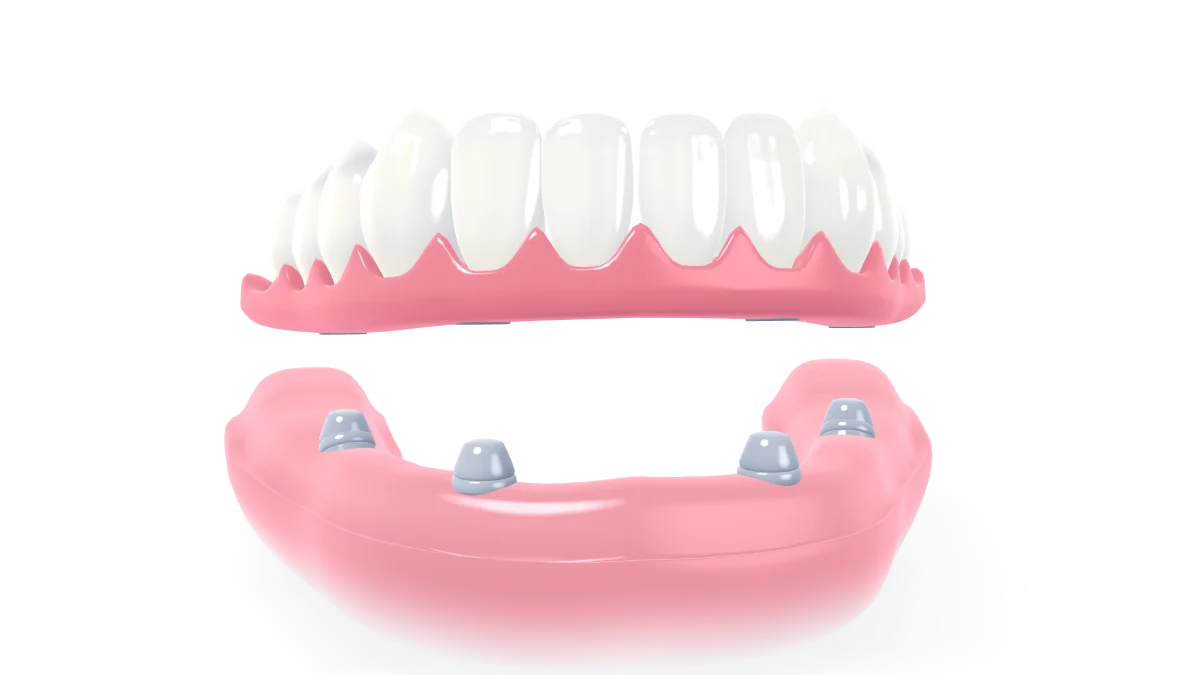
Instead of one implant per missing tooth, All-on-4 uses four. The two at the back are angled to take advantage of the denser bone toward the front of the jaw, which often means treatment can go ahead without bone grafting even when some bone has been lost. A full bridge is fixed onto those four implants, giving you a complete arch of teeth that stays put.
A full fixed arch on four implants
Angled implants make the most of available bone
Often avoids the need for bone grafting
Nothing removable — it stays in place
Often teeth on the same day
One of the reasons All-on-4 is so popular is that a fixed set of temporary teeth can frequently be fitted on the day of surgery. You go in with failing teeth or a denture and leave with a fixed set the same day, then return for your permanent bridge once the implants have fully healed. Whether immediate teeth suit you depends on your bone and bite, which we check during planning.
Fixed temporary teeth often fitted same day
No long gap without teeth
Permanent bridge after healing
Suitability confirmed at planning stage
Full arch implants in Malta: All-on-4 and the other options
A whole arch can be replaced in several ways, fixed or removable. These are the main routes at Apex Dental, with their prices.
All-on-4: fixed on four implants
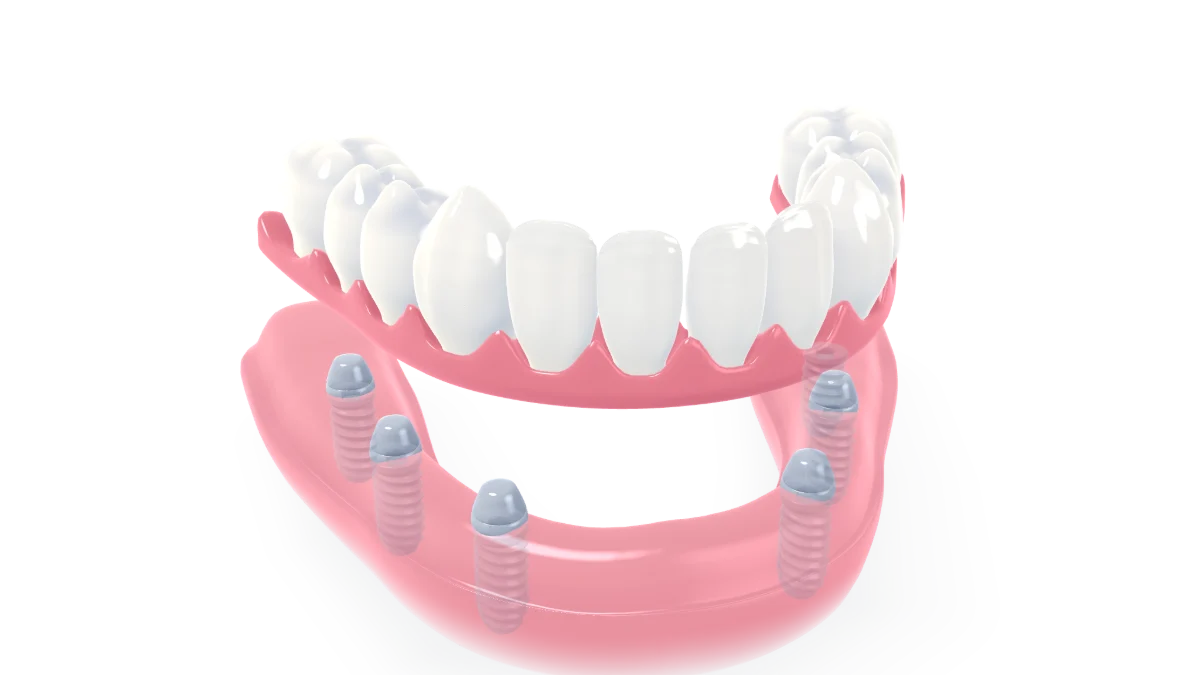
A complete arch of fixed teeth screwed onto four implants, two straight and two angled, leaving the roof of the mouth free. A full arch is €10,000.
All-on-6: fixed on six implants
Two more implants spread the chewing load further, where there is enough bone to place them.
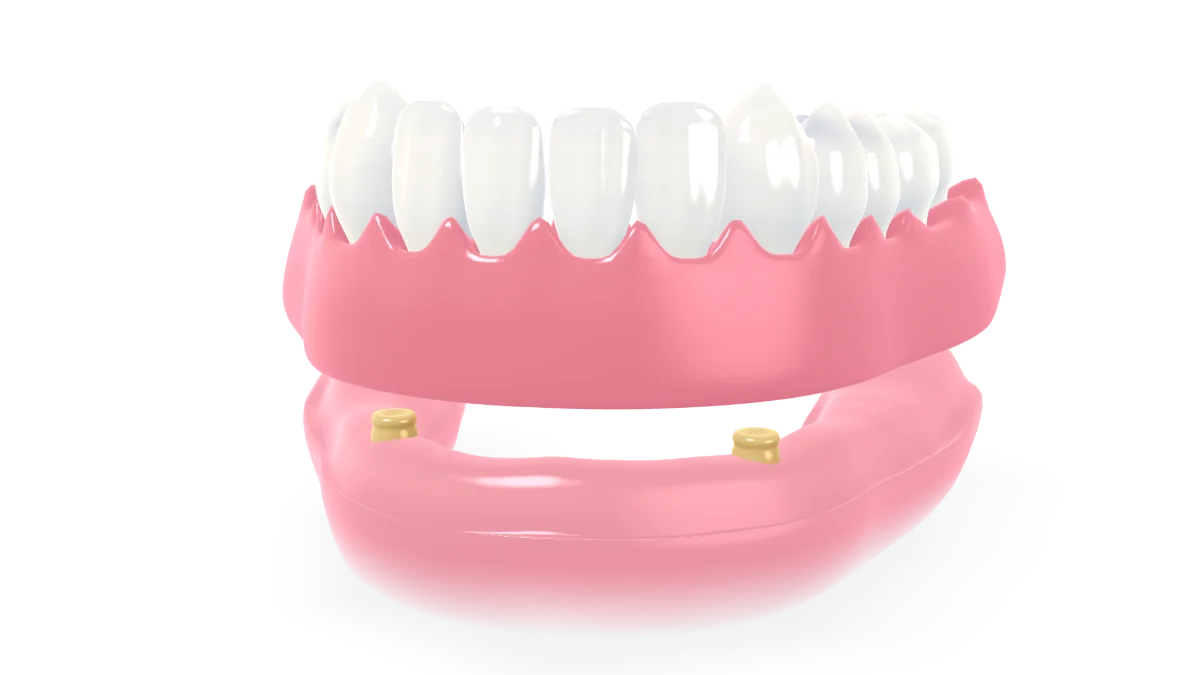
A lower denture on two implants
A removable denture that clips onto two implants, so it stops lifting when you eat. It is €3500, implants included.
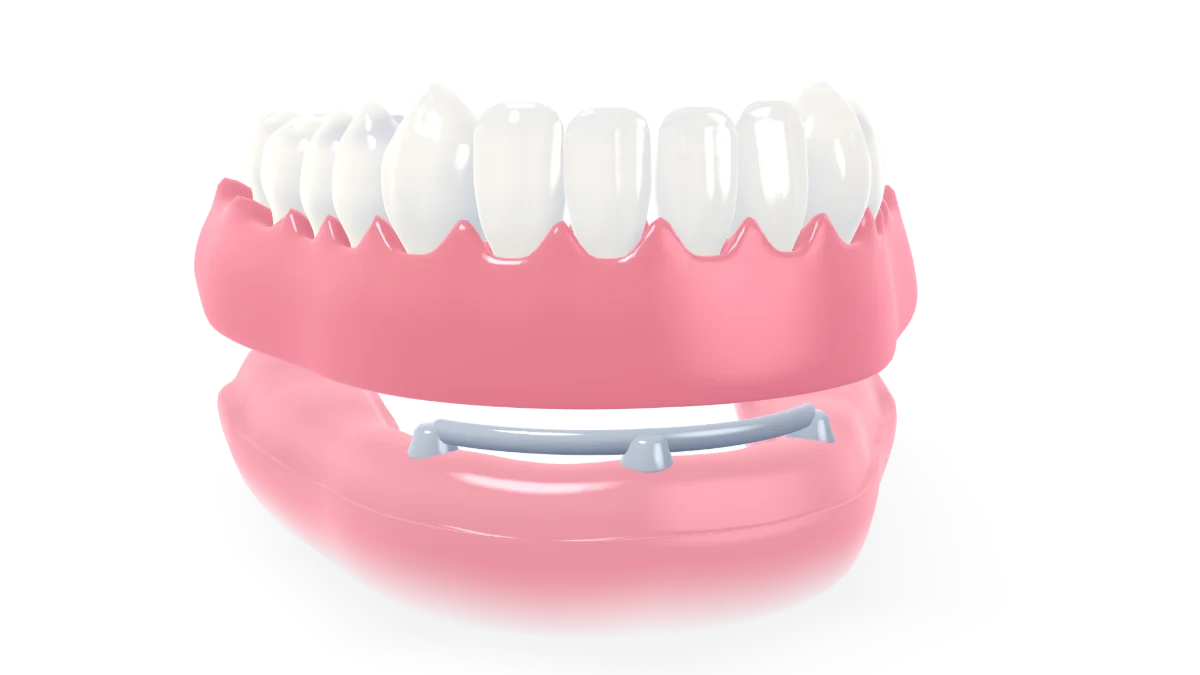
An upper denture on three implants and a bar
Three implants joined by a bar hold an upper denture firmly, the best removable option for the upper jaw. It is €5500.
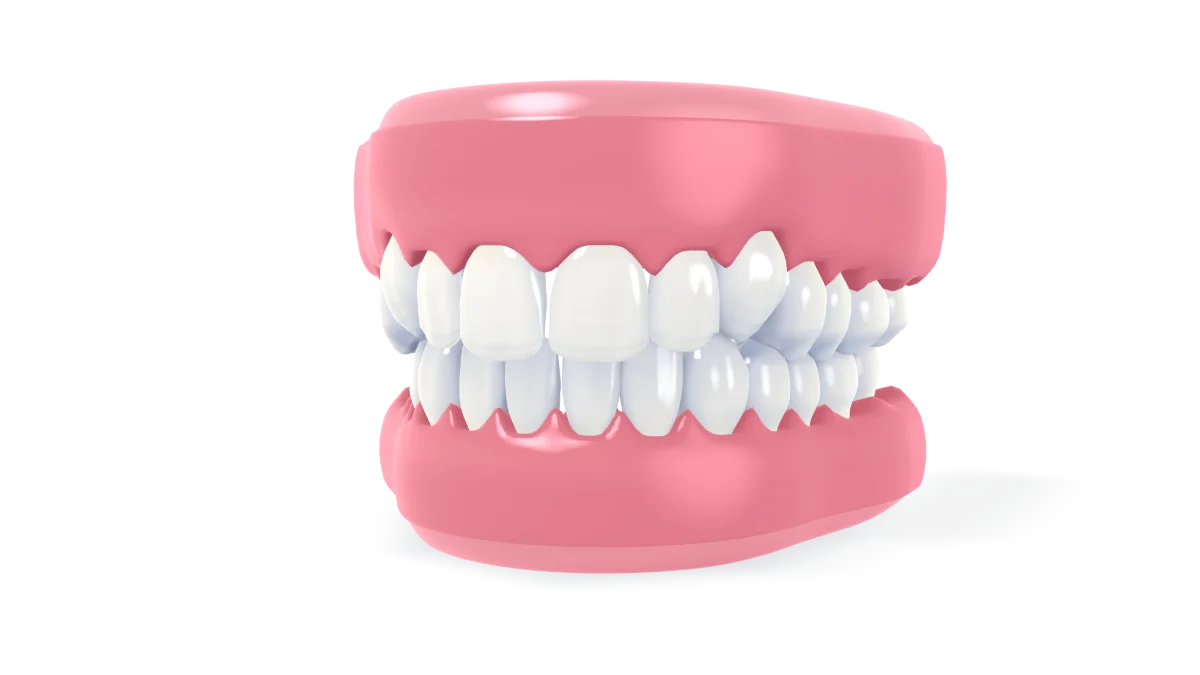
A conventional full denture
Rests on the gums, with no surgery and the lowest cost, but it can move and tends to loosen as the bone shrinks. A full acrylic denture is €400.
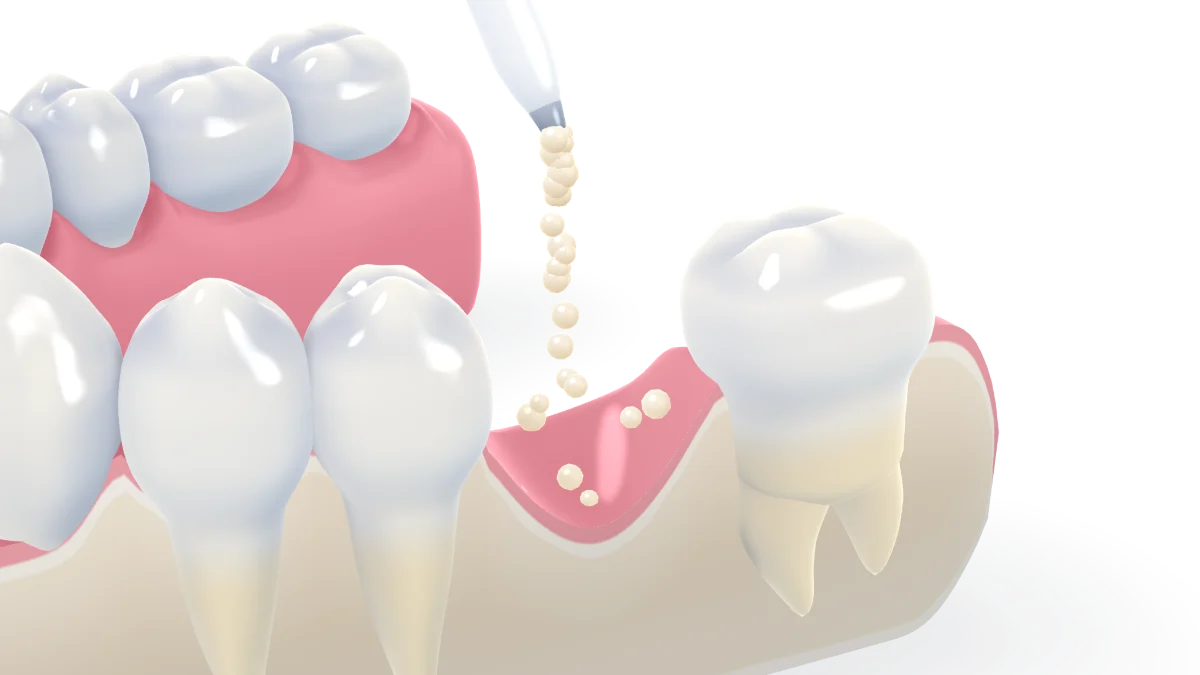
Not enough bone?
Angled implants often avoid grafting; where the scan shows too little bone, a graft can rebuild it first.
Treatment Process
What to expect, step by step
Step 1: Consultation and 3D scan
Dr Jonathan Mifsud reviews your medical history, examines your mouth and takes a CBCT scan, then explains the plan and what it will cost.
Step 2: Treatment day
With the area fully numbed, any failing teeth are removed and the four implants placed as planned. Where the bone allows, fixed temporary teeth are often fitted the same day or shortly after.
Step 3: Healing
Usually over three to six months the implants fuse with the bone, while you keep to soft foods and come in for short reviews.
Step 4: Your final bridge
Your permanent bridge is made in our laboratory, checked for fit, bite and appearance, and screwed into place.
Living with All-on-4: eating, cleaning and check-ups
Eating with temporary and final teeth
While the implants heal you keep to soft foods; the temporary teeth see you through healing but are not for heavy chewing. The final bridge is fixed firmly on the implants, and most people can eat a far wider range of foods with it than with a denture. Avoid cracking nuts or opening packets with your teeth, and if you grind at night, a night guard protects the bridge.
Cleaning, check-ups and how long it lasts
Daily brushing and cleaning under the bridge protect the gum and bone around the implants, which can be affected by the same kind of infection that causes gum disease. About every six months the bridge is taken off at the clinic and cleaned (€80). With good care it can serve you for many years; the teeth on it can wear or chip over time, and your dentist will advise if a repair or renewal is needed. Stopping or cutting down smoking also helps the implants stay healthy.
Transparent pricing — no surprises
The All-on-4 price is for one jaw: a Toronto bridge with zirconia teeth on four Straumann BLX implants. Your own cost depends on whether one or both jaws are treated and on anything needed first, such as teeth to remove or bone to rebuild. You have the full cost in writing before treatment starts, and you can pay by card, bank transfer or Revolut.
View full price listRisks, and the alternatives to All-on-4
All-on-4 is well established, but it is still surgery. Swelling, bruising and discomfort are normal for a few days, and as with any surgery there is a small risk of infection. Occasionally an implant does not fuse with the bone and may need removing, with the plan adjusted. Longer term, the main risk is inflammation of the gum and bone around the implants, more likely with smoking, poorly controlled diabetes or cleaning that slips, and the bridge can wear or chip. We go through how these apply to you at the consultation.
For other routes, see All-on-6, dentures held in by implants or our dental prosthetics page. For how implants work, read our dental implants page.
The evidence behind All-on-4
All-on-4 is one of the most studied treatments in implant dentistry, with follow-up now stretching beyond fifteen years. Here is a selection of the published evidence, with links to the original studies.
Maló and colleagues followed 245 patients with 980 All-on-4 implants and reported implant success of 98.1% at five years and 94.8% at up to ten years, with prosthesis survival of 99.2%.
A longer follow-up of 471 patients (1,884 implants) over 10 to 18 years found a prosthetic survival rate of 98.8% and implant survival of 93.0%.
A systematic review of the All-on-4 treatment concept confirmed it as a predictable option for full-arch rehabilitation.
Nobel Biocare reports up to 18 years of documented clinical success for the All-on-4 treatment concept.
Survival and success figures are drawn from published clinical studies and reflect averages across many patients; your own outcome depends on your case, bone, general health and aftercare.
Frequently asked questions
Thinking about All-on-4?
Book a consultation with Dr Jonathan Mifsud. He will assess your jaw with a 3D scan and explain whether All-on-4 — or All-on-6 — is the right approach for you.