Dental implants vs bridges — which is better for a missing tooth?
Implant or bridge for a missing tooth? An honest comparison: your other teeth and bone, healing time, comfort, cleaning, risks and cost at Apex Dental.
When you lose a tooth, you have two main fixed options: a dental implant or a dental bridge. Both can restore the appearance of your smile and your ability to eat comfortably, but they differ significantly in how they work, how long they last, and what they mean for the health of your surrounding teeth.
There is also a third option, a removable denture, which we come back to below. This guide compares the two fixed options and explains when each makes sense; the right answer for you depends on your teeth, gums and bone.
How a dental bridge works
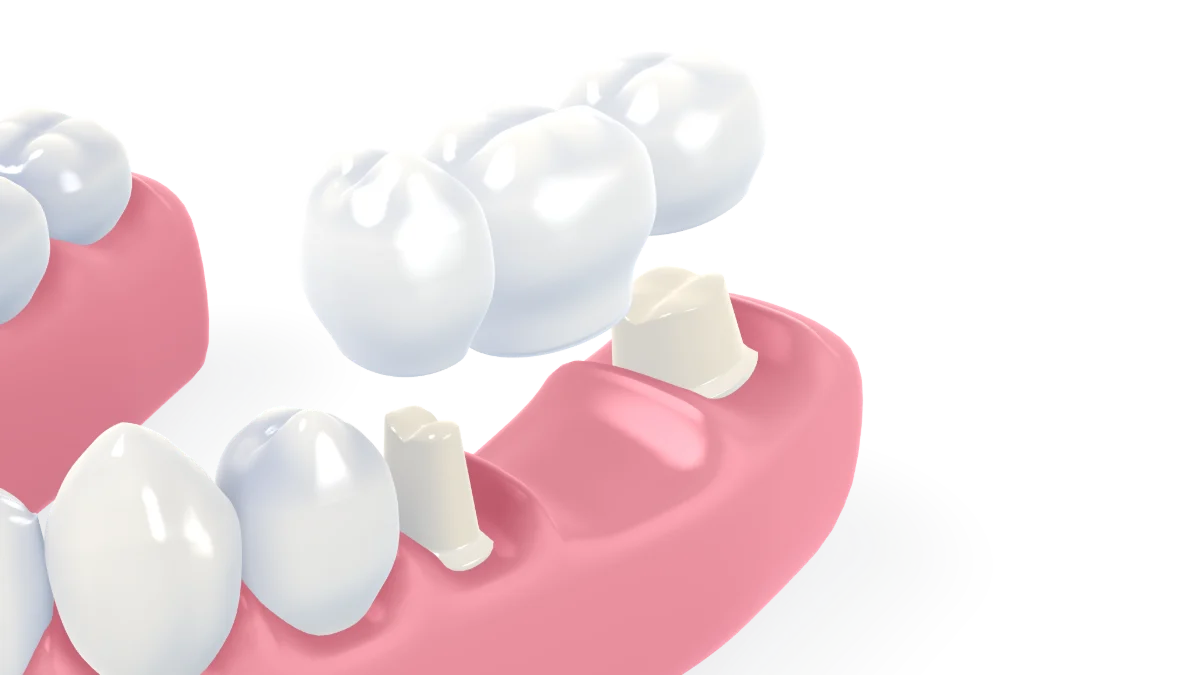
A dental bridge fills the gap left by a missing tooth by anchoring an artificial tooth to the teeth on either side. Those adjacent teeth must be prepared — meaning they are permanently reduced in size and crowned — to support the bridge. This is a well-established solution and can look excellent, but it involves altering healthy teeth that might otherwise have been left alone.
The false tooth in the middle is called a pontic. The bridge is fixed in place, so it does not come out, and it stops the neighbouring and opposite teeth drifting into the gap.
How a dental implant works
A dental implant replaces the root of the missing tooth with a titanium post that is placed directly into the jawbone. Once the implant integrates with the bone — a process called osseointegration — a crown is placed on top. The result is a fully independent tooth replacement that does not involve the adjacent teeth at all.
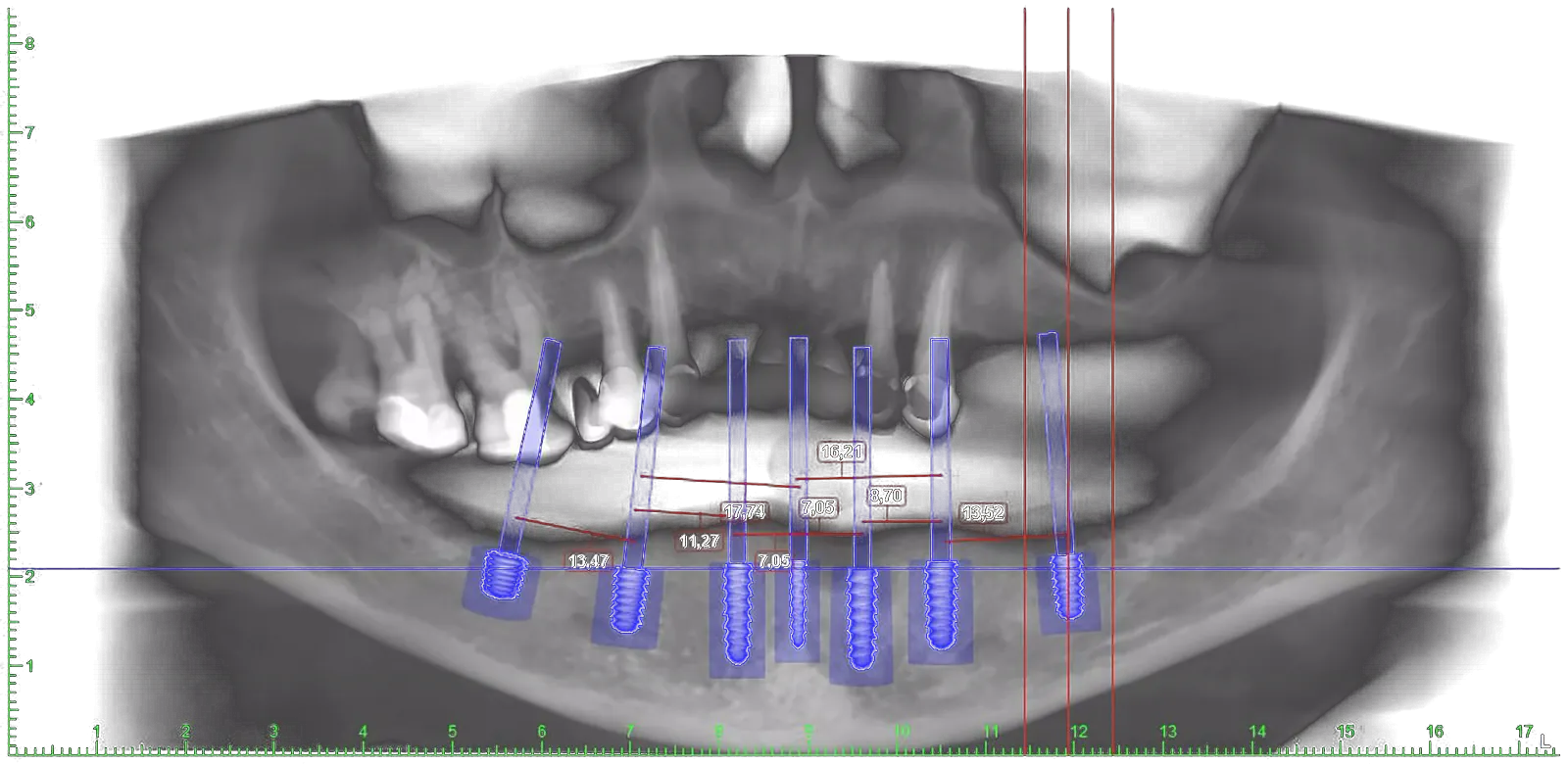
At Apex Dental, every implant is planned from a 3D scan and placed by Dr Jonathan Mifsud, our implantologist, at either of our clinics in Birkirkara.
The key differences
The most important difference is that implants preserve the adjacent teeth completely, while a bridge requires them to be permanently altered. Implants also help preserve the jawbone — when a tooth root is missing, the bone beneath it gradually shrinks. An implant keeps the bone loaded, in a similar way to a natural root, which helps preserve it. A bridge sits over the gum and does nothing to stop the bone shrinking under the gap.
In short: a bridge needs no surgery and is usually finished in two main visits, but it relies on the teeth beside the gap. An implant involves a surgical step under local anaesthetic and months of healing, but it stands on its own.
Which lasts longer?
The implant itself, the titanium post in the jaw, is designed to be permanent, and once it has fused to the bone there is no reason it cannot last for decades with good care. The crown on top takes the day-to-day force of chewing and may eventually need replacing, much like any hard-working tooth. What decides an implant's lifespan more than anything is how well the gum and bone around it are kept healthy.
A bridge can also last many years when it is looked after, but there is no fixed number that applies to everyone: it depends on the material, the supporting teeth, your bite and how well it is kept clean. Because a bridge depends on the teeth holding it, if one of them develops decay or gum problems the whole bridge can be affected. That is why, for a single gap, an implant is usually the better long-term answer, while a bridge can still be the sensible choice in the cases below.
When is a bridge the right choice?
Bridges remain a valid option in certain situations — for example, when there is insufficient bone for an implant without significant grafting, when the adjacent teeth already require crowns for other reasons, or where budget is a primary consideration. Your dentist will advise based on your specific clinical situation.
A bridge works best when the teeth either side of the gap are healthy and firm, with sound gums and bone around them. It makes most sense when those teeth already have large fillings or need crowns anyway, because crowning them then does double duty. Some people also simply prefer not to have surgery, and a bridge avoids it.
Does an implant hurt more than a bridge?
Both are done with the area numbed by a local anaesthetic, so during treatment you should feel pressure and vibration rather than pain. Having teeth prepared for a bridge is much like having a crown: the teeth and gum can feel tender or sensitive for a few days afterwards. After an implant is placed, some swelling and tenderness are normal for a few days, similar to having a tooth taken out, and ordinary painkillers usually manage it well.
How long does each take?
A bridge usually takes two main visits: one to prepare the teeth either side of the gap and fit a temporary, and one to fit the finished bridge. An implant needs time to fuse with the bone before the final crown goes on, usually three to six months, and if the gap would show meanwhile, a temporary tooth can be fitted. A bone graft first makes it longer.
Sometimes, where the bone is healthy and there is no active infection, an implant can be placed on the same day a tooth is removed. Whether that suits you is decided from the 3D scan, not assumed.
Am I suitable for an implant?
Most adults who are missing a tooth can be considered for an implant. Age on its own is rarely the deciding factor; your general health, the health of your gums and how much bone there is matter far more. Where the bone has shrunk after a long gap, a bone graft or, in the upper back jaw, a sinus lift can often rebuild enough to make an implant possible. Untreated gum disease, heavy smoking or a health condition that is not under control need managing first. A consultation and a 3D scan are what tell you for certain.
What about a denture?
A removable denture is the third way to replace missing teeth. It needs no surgery, is usually the more affordable route and can replace several teeth at once. The trade-off is that it rests on the gum, can move when you eat or speak, and tends to loosen over the years as the bone beneath it shrinks. Implants can also hold a denture in place so it stops slipping.
Replacing more than one tooth
Where several teeth are missing in a row, you do not need one implant for every tooth: a small number of implants can support a bridge between them, so the neighbouring natural teeth are still left alone. When most or all of a jaw is missing, a full arch of fixed teeth can be held on four implants with All-on-4, or on six with All-on-6 where the bone allows.
Looking after an implant or a bridge
Both need daily care and regular hygiene visits. With a bridge, the extra habit is cleaning under the false tooth every day, where food and plaque collect, using floss threaders or small interdental brushes. An implant is brushed like a natural tooth and cleaned between with floss or an interdental brush. It cannot decay, but the gum and bone that hold it can be affected by the same kind of infection that causes gum disease, so keeping that area clean is what protects it. If you grind your teeth, a night guard takes the strain off either.
The risks of each
Neither option is free of risk. With a bridge, the prepared teeth can be sensitive for a while, occasionally one becomes inflamed later and needs a root canal, and porcelain can chip. An implant involves surgery and its risks, such as infection, and occasionally an implant does not fuse with the bone and may need removing, with the plan adjusted. Longer term, the main thing to guard against with an implant is inflammation of the gum and bone around it, more likely with smoking or when cleaning slips. Your dentist will go through how these apply to you before you decide.
Implant and bridge prices at Apex Dental
An implant is priced with its crown. A bridge is priced by the number of teeth it spans, the crowned teeth either side and the false tooth between them, so we give you that figure after looking at the gap. A consultation and a 3D scan plan implant treatment, and you have the full cost of your plan in writing before anything starts.
- Implant Complete with CrownDepends on the implant brand, abutment type and crown type.
- €1,500 – €1,800
- Crown / Pontic on Implant
- €400.00
- Full Porcelain Crowns / ZirconiaVariable full porcelain crowns available at the same price.
- €450.00
- Implant ConsultationDeducted from the implant bill if implant treatment goes ahead.
- €30.00
- CBCT X-Ray3D X-ray of the mouth; copy available on request. Important for implant planning; part of the implant fee if implant surgery is done.
- €120.00
At your consultation we lay the options that fit your mouth side by side, with the cost of each, rather than push one. If you have a question first, call or WhatsApp us.

Ready to visit Apex Dental?
Book an appointment online or contact us directly — our team will guide you through your options.