How do dental crowns protect damaged teeth?
When a tooth needs a crown, what crowns are made of, whether it hurts, how many visits it takes and how to make it last. A plain guide from Apex Dental.
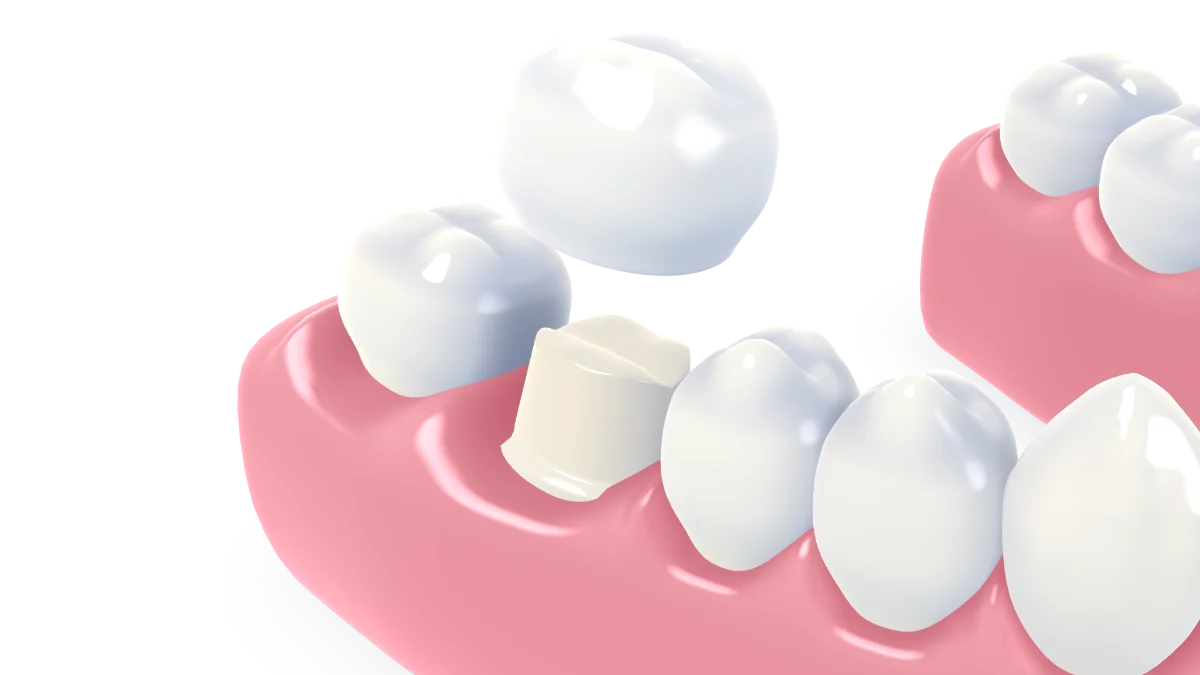
A dental crown is a cap that fits over the entire visible portion of a tooth, restoring its shape, size, strength, and appearance. Crowns are one of the most versatile and long-lasting restorations in dentistry, used in a wide range of situations where a tooth needs protection or reconstruction.
Where a filling replaces part of a tooth, a crown covers all of it, holding a weakened tooth together and spreading the force of biting across it. That is the whole idea: a tooth that would otherwise crack, or keep losing its fillings, gets a strong outer shell, so it can go on working as your own tooth. This guide explains when a crown is needed, what the appointments involve, whether it hurts and how to make it last.
When is a crown recommended?
The most common situations that require a crown include teeth that have undergone root canal treatment, which are more brittle and prone to fracture without a crown to reinforce them. Crowns are also used for teeth with large decay or fractures that cannot be reliably restored with a filling, severely worn teeth, and teeth with a poor appearance that cannot be improved with less invasive options.
Signs that can point towards a crown include a large old filling that keeps breaking, a tooth with a crack or a corner that has snapped off, pain when you bite on one spot, or teeth that have worn short from grinding. None of these means a crown for certain, and sometimes a new filling is enough. That is why the tooth is examined and X-rayed first, to see how much healthy tooth is left and whether the root is sound, before anything is recommended.
Crowns after root canal treatment
A back tooth that has had root canal treatment is usually crowned afterwards. Once the nerve has been removed the tooth becomes more brittle, and a crown is what protects it from cracking under normal biting: the root canal saves the tooth, and the crown keeps it in service. When too little tooth is left above the gum to hold a crown, a post set into the root and a core built up around it give the crown a solid base.
People often ask the opposite question. You do not usually need a root canal before a crown: many crowns go on teeth with a healthy nerve, and a root canal is only needed if the nerve is infected or badly inflamed, which an examination and an X-ray show.
What are crowns made of?
Modern crowns are most commonly made from ceramic or zirconia — both tooth-coloured materials that are strong, durable, and virtually indistinguishable from natural teeth. Zirconia in particular is highly resistant to fracture and is an excellent choice for back teeth that are under significant chewing load. Metal-fused options are still used in some specific situations but are less common in contemporary practice.
Full porcelain and zirconia crowns are tooth-coloured all the way through, with no metal, so there is no dark edge to show at the gum. A porcelain crown on a metal base has a porcelain outer shell over a metal inside, and it is still the sensible choice in some situations; your dentist will say so if yours is one of them.
How many appointments does a crown take?
A crown usually takes two main visits. At the first, the tooth is numbed and shaped so the crown can sit over it, and a digital scan records it, with no putty impressions. You leave with a temporary crown that protects the tooth while the final one is made. At the second visit, the final crown is checked for fit, bite and colour, then fixed in place. Extra visits are only needed if the tooth needs something first, such as a root canal, a post and core or gum treatment.
Does getting a crown hurt?
The tooth is numbed with a local anaesthetic before it is prepared, so you should feel pressure and vibration rather than pain. Afterwards the tooth and gum can feel tender or sensitive for a few days, which usually settles on its own. A new crown can also feel slightly different in the bite at first. If the bite still feels high after a few days, tell us, as it can be adjusted.
What if my temporary crown comes off?
It is rarely urgent. Keep the temporary, avoid chewing on that side, and call or WhatsApp us so it can be refitted, because the prepared tooth can be sensitive and can shift slightly without it. Do not glue it back with household glue.
How long does a crown last?
Looked after, a crown can last many years, though there is no single number that applies to everyone. How long yours lasts depends on the material, the tooth underneath and your bite, including whether you grind your teeth, and above all on keeping the edges clean and coming for check-ups so any problem is caught early. Your dentist will give you a realistic estimate for your own case.
Most crowns that fail early do so for one of a few reasons: the edge where crown meets tooth was not kept clean, the teeth were used as tools, or grinding went unprotected. Keeping the edges clean, not biting on very hard objects and protecting your teeth if you grind all help a crown last.
Looking after a crown
A crown is cared for like a natural tooth: brush twice a day with a fluoride toothpaste, clean between the teeth every day and keep up your check-ups and hygiene visits. The crown itself cannot decay, but the tooth underneath it can, and the edge where the crown meets the tooth is where decay can start, so it needs particular care. Do not use your teeth to open packets or bottles, and if you grind your teeth, a night guard protects the crown while you sleep.
Will a crown match my other teeth?
A crown is matched to the shade and shape of the teeth around it. It does not whiten, though, so if you are thinking about teeth whitening, it is best done first; the crown is then made to match your new shade. For a front tooth, a crown is often planned together with other cosmetic work so the whole smile matches.
Risks to know about before you start
Crowns are a well-established treatment, but they have downsides. Preparing a tooth for a crown removes part of it, and that cannot be undone. Teeth can be sensitive for a while afterwards, and occasionally a tooth with a deep filling or a crack becomes inflamed later and needs a root canal. Porcelain can chip, and a temporary can come loose before the final crown is fitted. Careful planning and good cleaning reduce these risks, and your dentist will tell you what applies to your tooth before you decide.
Crowns, bridges and implants
A crown is also the building block of a bridge and the part you see on a dental implant. When a tooth is missing rather than damaged, a bridge crowns the teeth either side of the gap and joins a false tooth between them, while an implant replaces the root and carries a crown of its own. Our comparison of implants and bridges explains how to choose between them.
Crown prices at Apex Dental
Crowns are priced per tooth. If the tooth needs a post and core to hold the crown, that is added, and a temporary crown protects the tooth while the final one is made. Anything a tooth needs first, such as a root canal, is quoted before work starts, and a bridge is priced by the number of teeth it spans.
- Full Porcelain Crowns / ZirconiaVariable full porcelain crowns available at the same price.
- €450.00
- Crowns, Metal/PorcelainPorcelain outer shell with metal inside.
- €450.00
- Post and Core Build Up
- €90.00
- Lab Made Temporary Crowns
- €50.00

Ready to visit Apex Dental?
Book an appointment online or contact us directly — our team will guide you through your options.